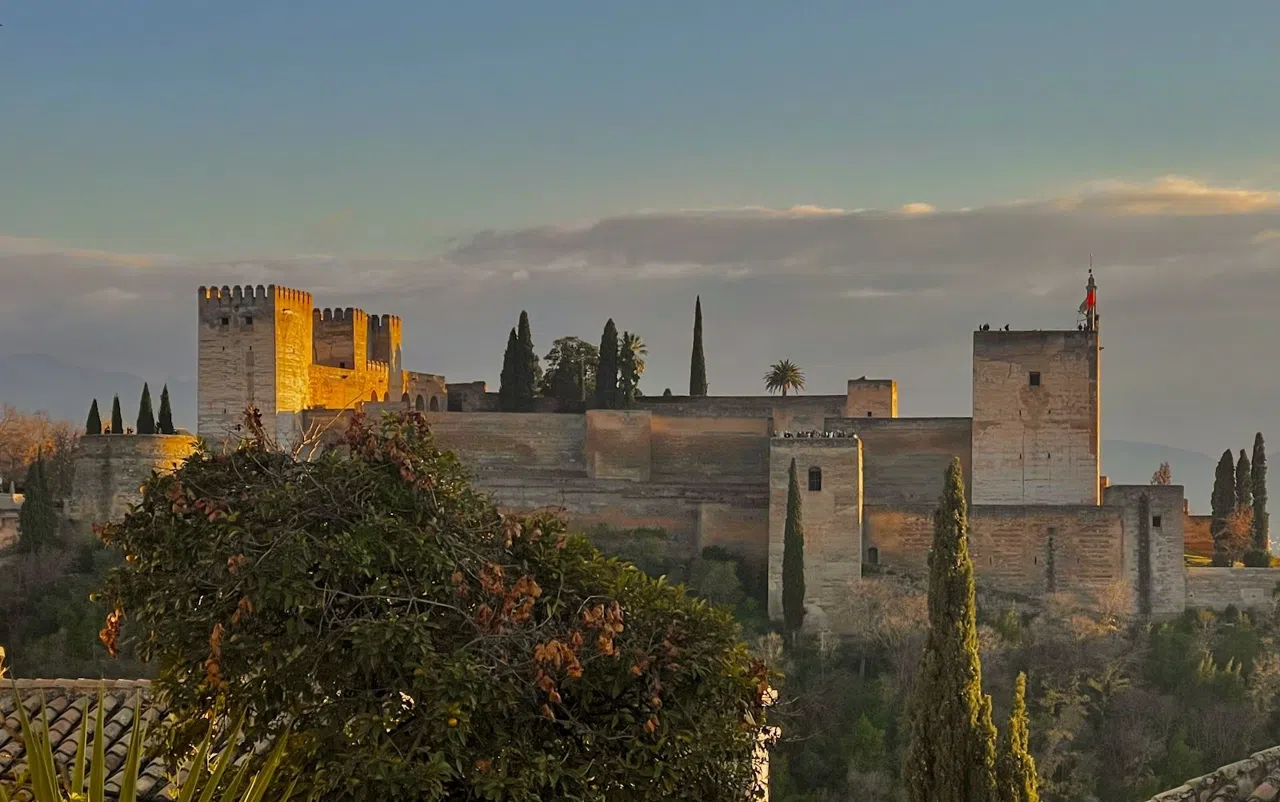

The hill turns red twice a day, and neither time is the one the postcards promise. At eight in the morning the walls come up warm and grainy out of the shade of the elms, the water channels still cold; at dusk they burn for about twenty minutes while the sun sinks behind the viewer rather than behind the fortress. In between sits a walled town of palaces, gardens, a Renaissance cube and a ruined citadel, plus a ticket that hands you one unrepeatable half hour at the centre of it all.
What the walls actually contain
Most first visits go slightly wrong because people arrive expecting a single door and a single building. The Alhambra is a fortified town, and inside the ramparts there are four separate things, each with its own logic, its own crowd behaviour and its own best hour.
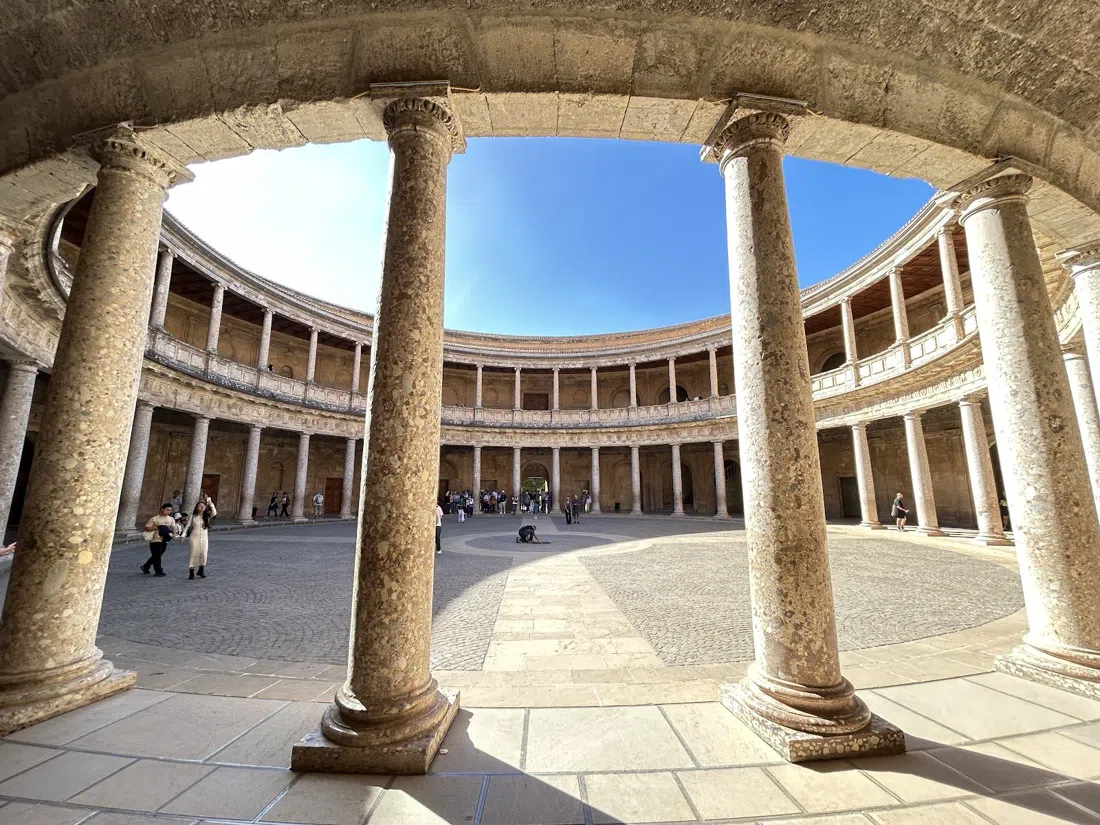
The Nasrid Palaces (Palacios Nazaríes), at the heart of the Alhambra hill, are why the place lives in the imagination. Three linked royal residences, built for court ceremony rather than display, they work by restraint and repetition: carved plaster that reads as lace until you stand close enough to see the Arabic inscriptions running through it, cedar ceilings cut into stars, water held so still in the long pools that the architecture doubles and the sky arrives at your feet. It is quiet work, and it rewards slowness more than any monument of its fame has a right to.
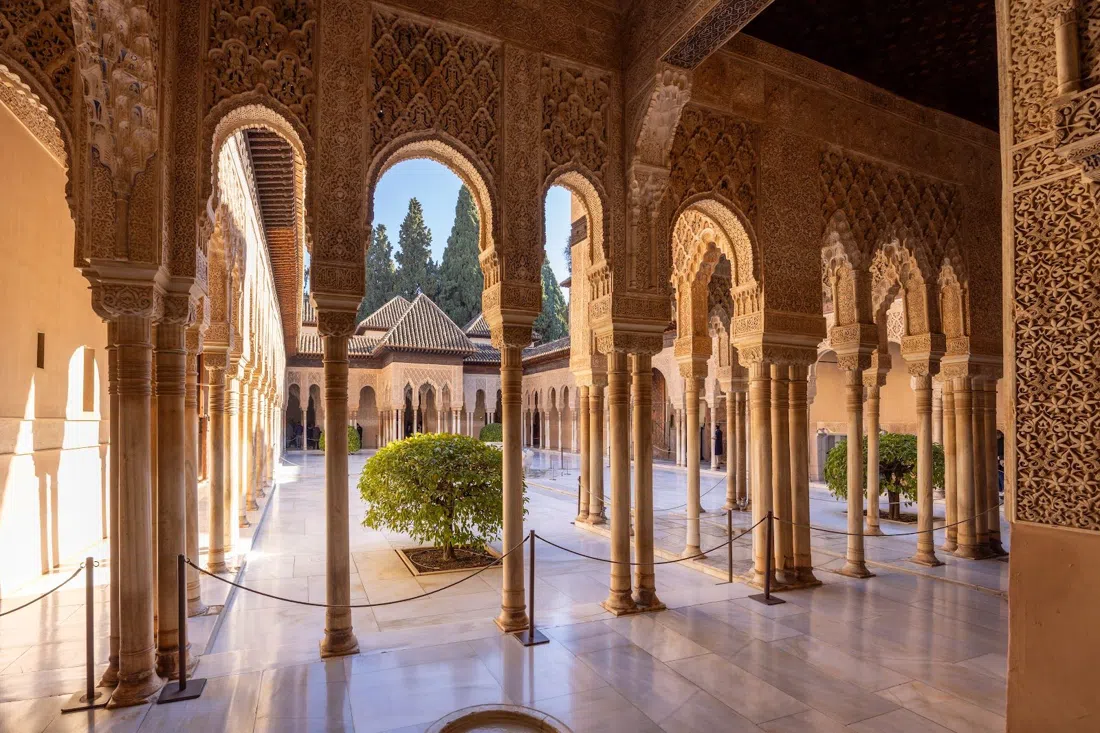
The Alcazaba, the fortress at the western tip of the hill, is the oldest part and the plainest: bare towers, a parade ground reduced to foundations, ramparts you can walk. It gives the best free-standing view from inside the walls, out over the rooftops and away to the mountains, and the Torre de la Vela at its end is the one climb genuinely worth making.
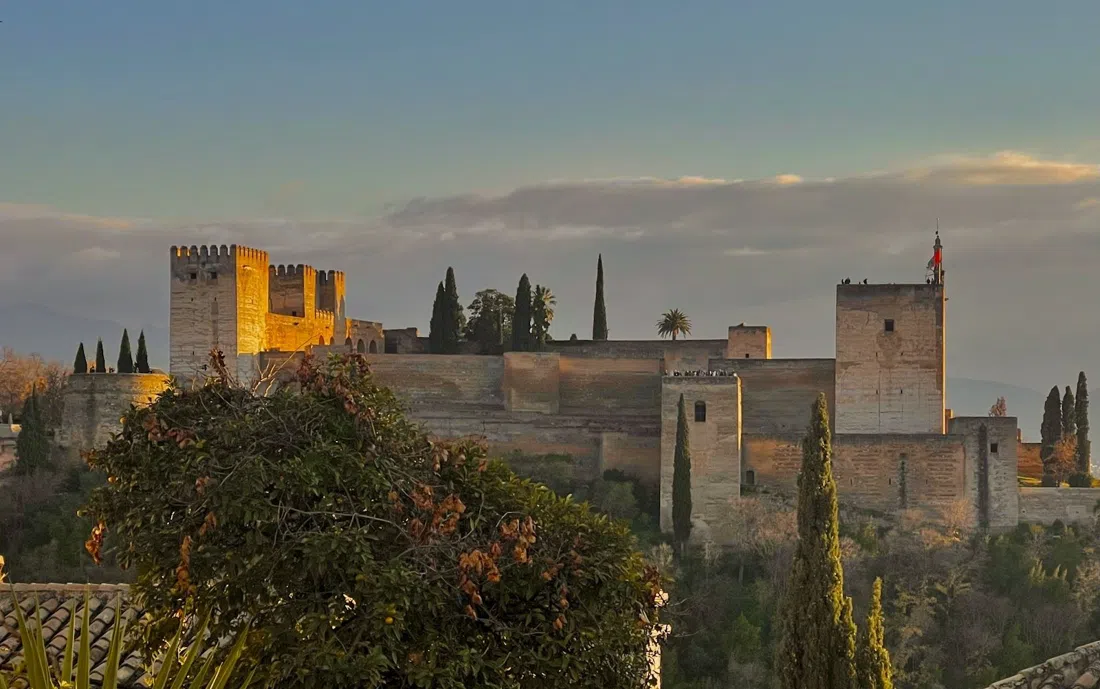
The Palace of Charles V (Palacio de Carlos V) sits in the free-access zone and needs no ticket and no time slot at all: a square block with a perfectly circular two-storey courtyard cut out of its middle, dropped into a Nasrid palace-town by a Holy Roman Emperor who wanted somewhere to be Roman. It jars in the middle of the site, and it is also the obvious place to meet, to shelter from rain, and to sit down.
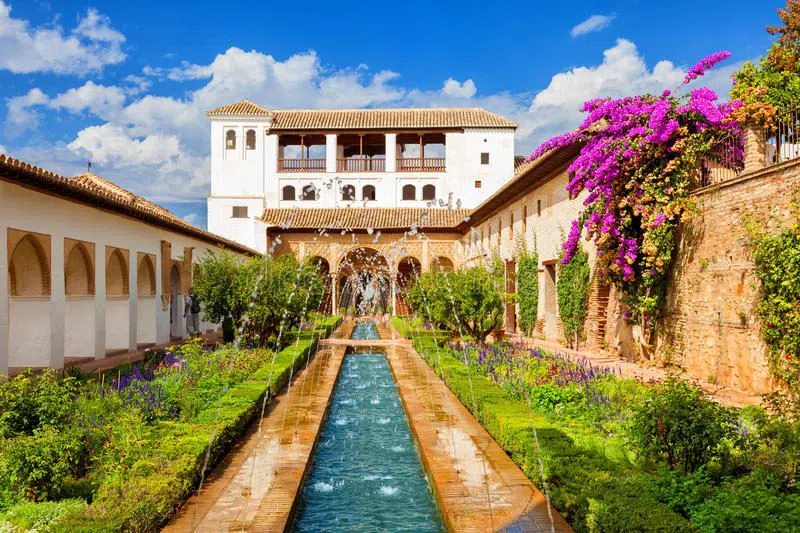
The Generalife, at the upper end of the hill above the palaces, was the summer estate: orchards, terraces, clipped hedges and a famous courtyard of crossed water jets. The paths are wide and it is the least pinch-pointed part of the complex, the one section where a group of ten does not feel like an imposition.
The half hour that governs everything else
Everything about the day bends around one fact: entry to the Nasrid Palaces is by a thirty-minute timed slot, with roughly 300 people admitted per half hour, and the ticket carries a named identity document that is checked at the door. Miss the slot and there is no refund and no re-entry, no way back in at all.
So read the slot as the fixed point and schedule every other decision around it. Once inside the palaces you may stay as long as you like; only the entry is policed. Allow a generous twenty minutes to reach the palace door from the main entrance pavilion, because the site is bigger on foot than it looks on the map and people misjudge it constantly. If you are travelling with anyone slow, double that.
The practical shape that follows is simple. With an early slot, do the palaces first and walk uphill to the Generalife afterwards. With an afternoon slot, do the Generalife first, since it is the uphill half of the site and walking it twice costs twenty minutes in each direction for nothing. Either way, put the Alcazaba in the first cool hour of your day if you can: the tower roof is entirely exposed, with no shade whatsoever, and the stairs up the Torre de la Vela are single-file and bottleneck fast.
Filling the gaps around your slot
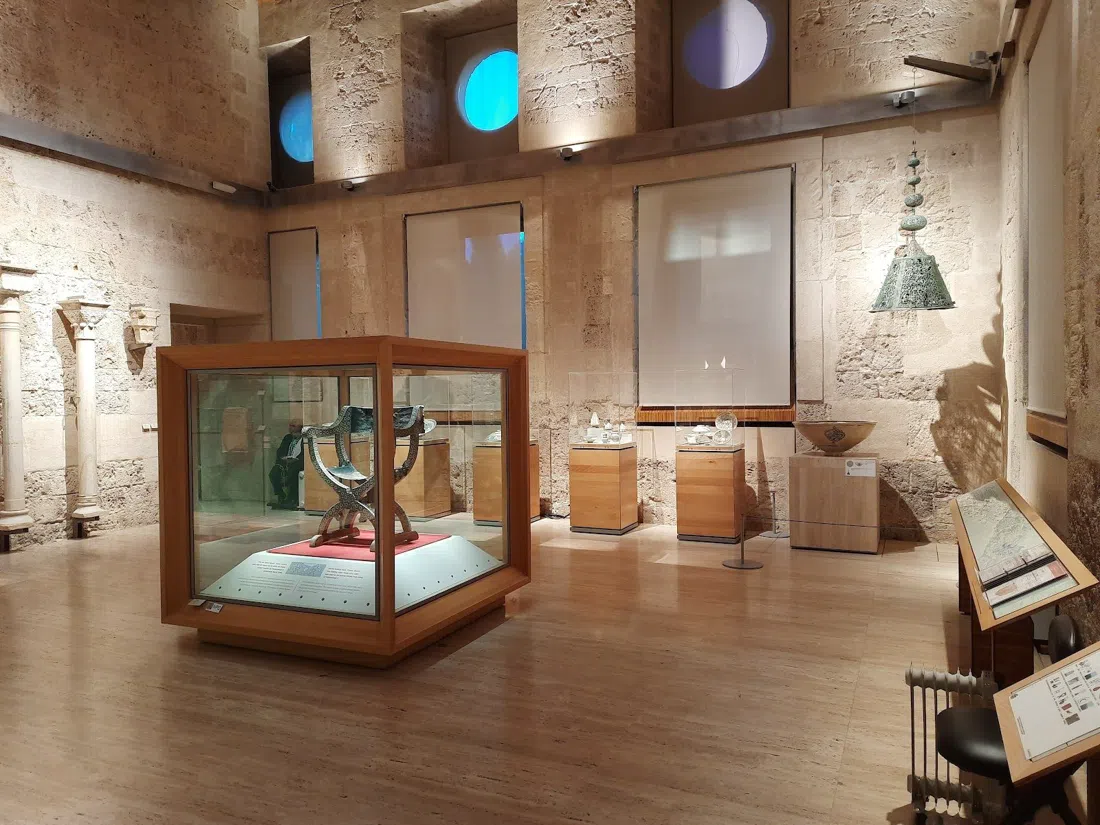
Slots rarely land where you want them, so it helps to know what absorbs a spare hour. Inside the Palace of Charles V, on the hill itself, the Museo de la Alhambra holds the original woodwork, tile and carved panels stripped from the palaces over the centuries. It is free, it is small, and it explains what you have just walked through better than any panel out on the site. It also closes at 2.30pm, earlier than the monument, and it shuts on Mondays. Go before lunch or not at all.
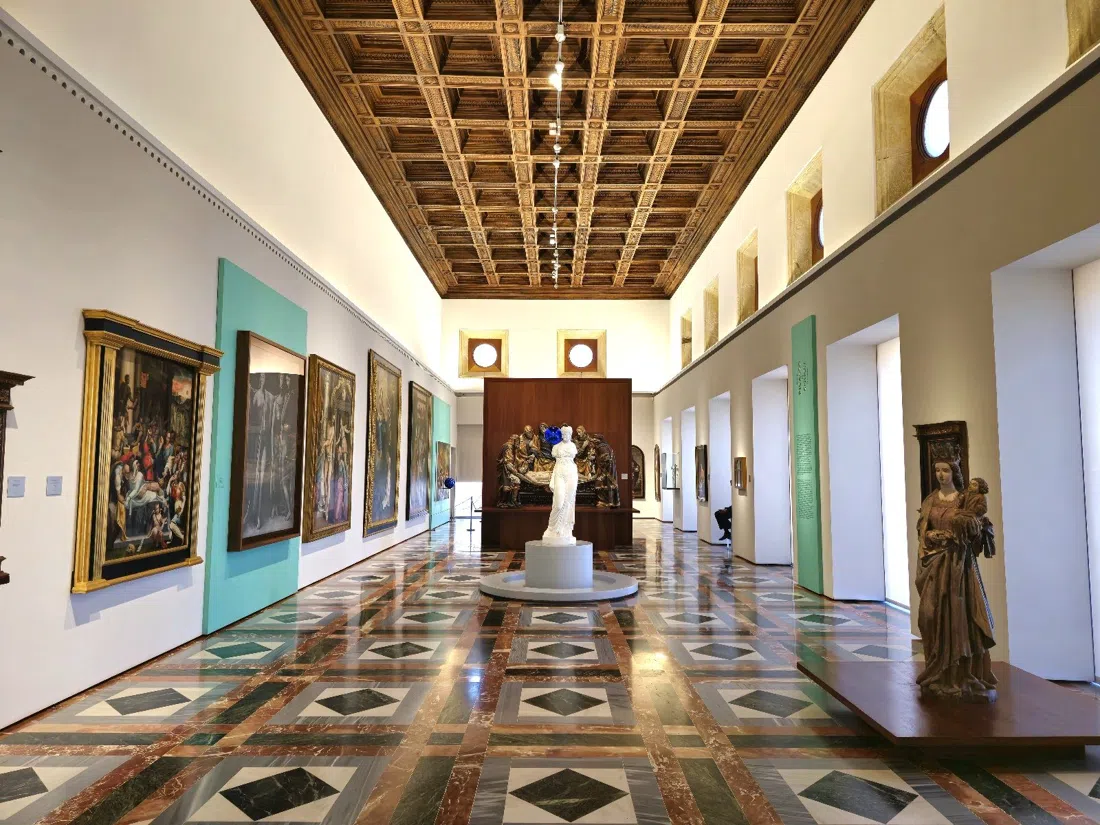
Upstairs in the same building, the Museo de Bellas Artes de Granada is run by the regional government, not by the Alhambra, and needs no monument ticket. It is free for EU citizens and a small fee otherwise, also closed Mondays, and it is almost always quiet: a genuinely useful hour if your Nasrid slot is hours away and the hill is baking.
Outside the ticketed zone, two minutes from the Alhambra's own car park, the Carmen de los Mártires is a free and unbooked garden of ponds, peacocks and terraces that is nearly always empty. For burning an hour before a late slot, nothing else on the hill comes close.
Tickets at the door against booking ahead
The general day ticket costs €22.27 and covers the Nasrid Palaces, the Alcazaba, the Generalife and the Palace of Charles V. A night visit to the Nasrid Palaces alone is €12.73, and a gardens-only ticket is also €12.73, the fallback worth knowing when the palaces are gone and you still want the Generalife. Guided options run from roughly €25 to €105 per person depending on group size and whether the guide is yours alone.
Buying at the door is possible and sometimes works out of season, but it is a gamble on the one part you came for, because the palace slots are the scarce commodity, not the site. Book ahead in the exact name of the person travelling, and carry the same document you booked with. The door staff do check it.
On whether to take a guide: the bookable tours here carry 9,453 traveller reviews between them, with the top one rated 4.1 out of 5 from 3,957 reviews, and guided departures run seven days a week, from 35 USD per person. A guide is worth it if you want the Nasrid decoration read aloud to you, the inscriptions, the dynastic arguments, the hydraulics, and it takes the slot admin off your hands. It is not worth it if you are the kind of traveller who wants to stand in the Court of the Myrtles for twenty minutes saying nothing. Both are legitimate ways to spend the morning; only one of them is improved by a group of thirty.
Eating, drinking and sleeping on the hill
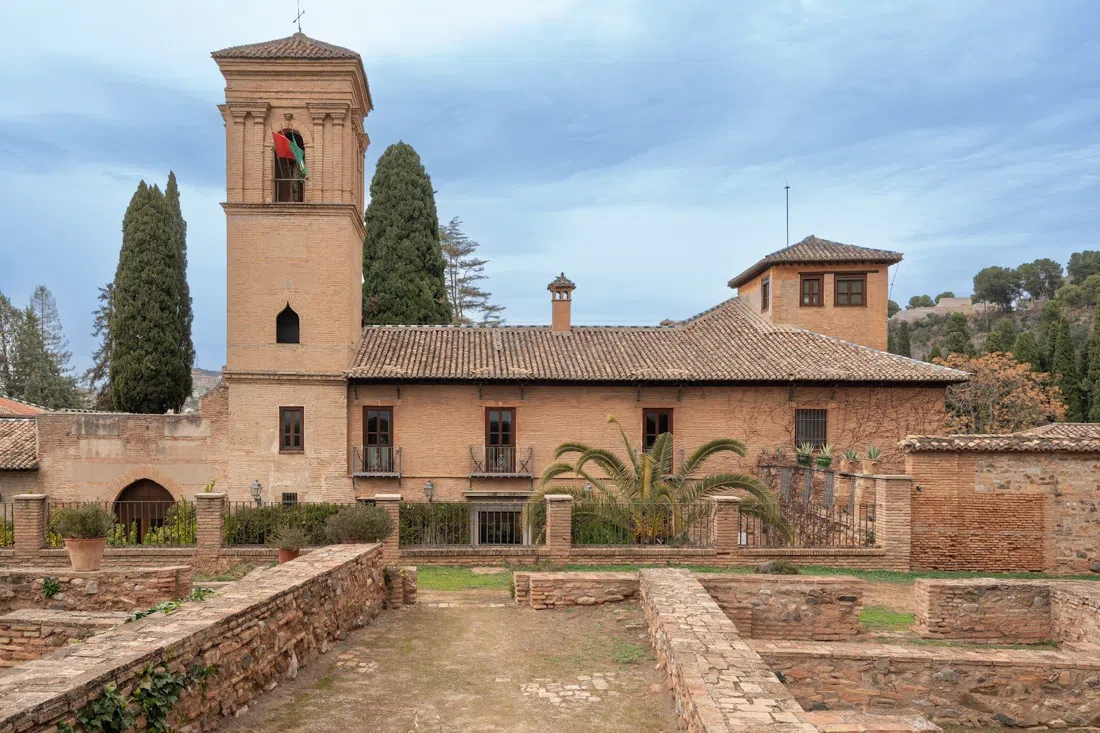
Inside the walls, the Parador de Granada (Parador de San Francisco) occupies a converted convent and is the only place you can actually sleep within the monument. Rooms are high-end, typically €300 and up, the hotel is small, and it books out far ahead; the terrace and restaurant take reservations, including for groups, and are open to non-residents. What you are paying for is not the room but the hour after the day tickets have been walked out, when the hill goes quiet and you are still on it. If that is out of range, plenty of places below the walls trade on the same outlook, and a Granada hotel search is the fastest way to compare what the view is really costing you.
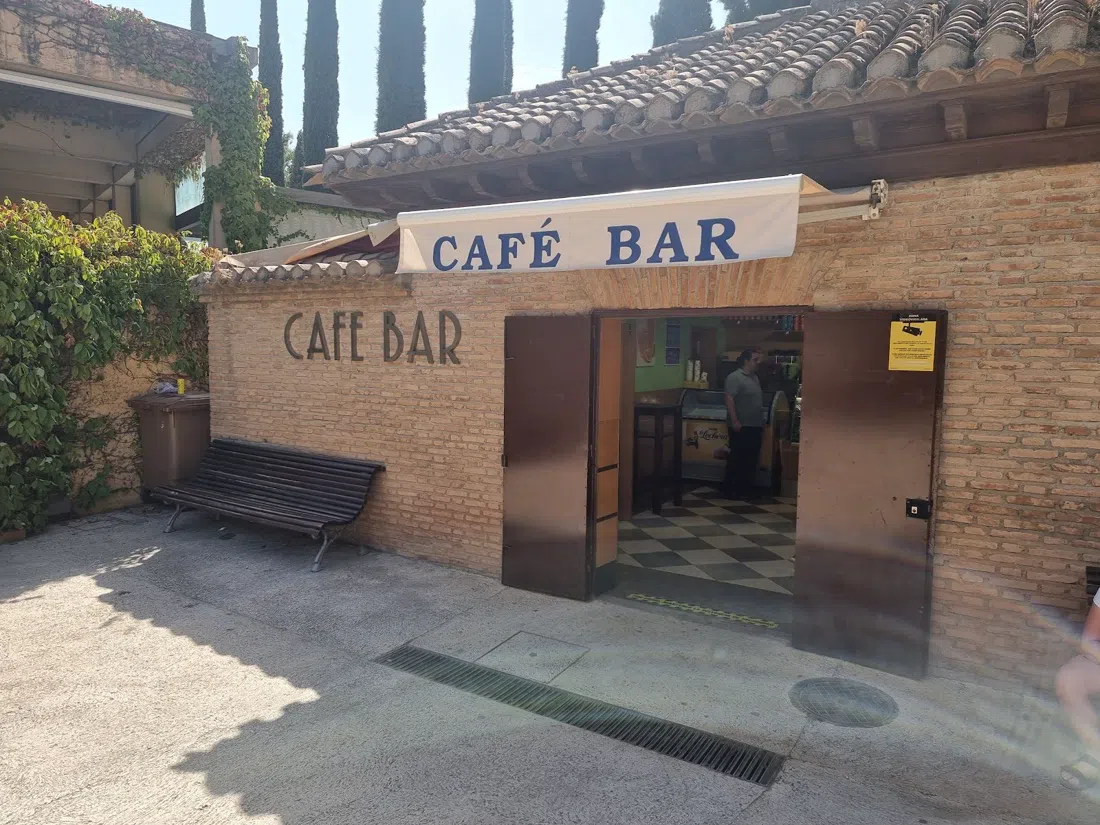
For logistics rather than pleasure, the Polinario Café Bar on the hill near the entrance pavilion is the last cheap coffee and the last toilet before the gate. It opens at 8am for the first slots, and a coffee with a tostada runs to a few euros. There are no frills, it takes walk-ins, and the indoor room is small.
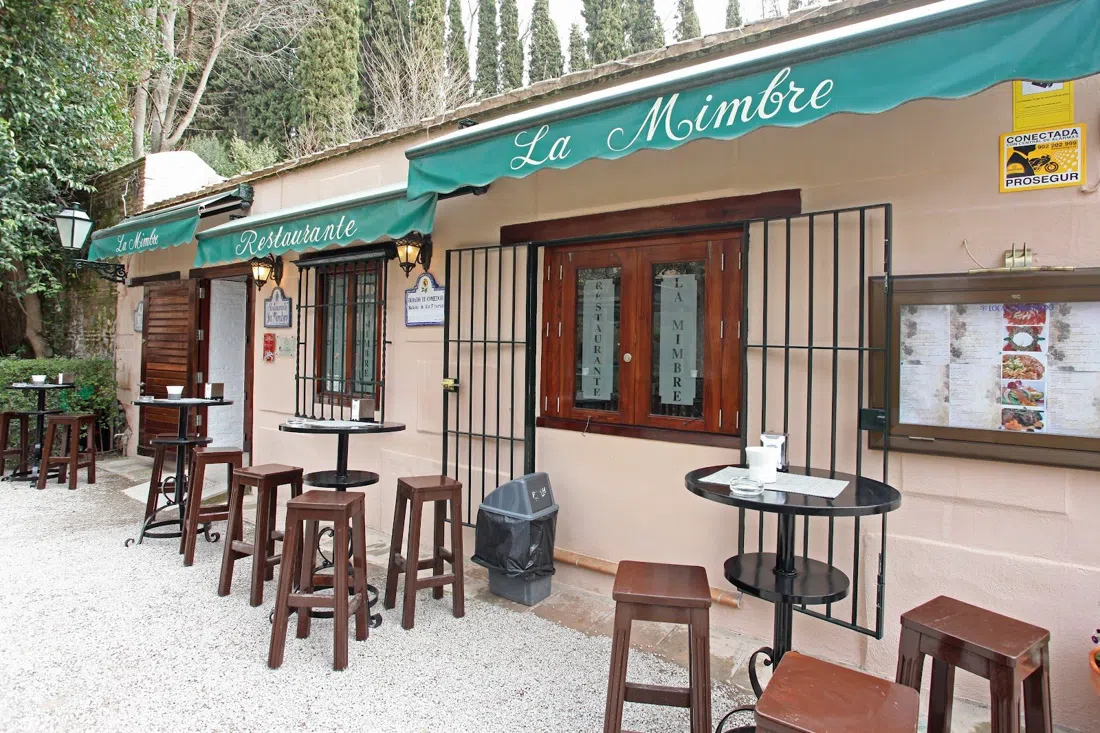
Walking down afterwards through the Puerta de la Justicia you land almost at the door of Restaurante La Mimbre, at the foot of the hill, going since 1881, with a large tree-shaded terrace that turns over fast at lunch. Mains are roughly €12 to €22 with a cheaper menú del día. It is a landing spot more than a destination, and it is the better for knowing that.
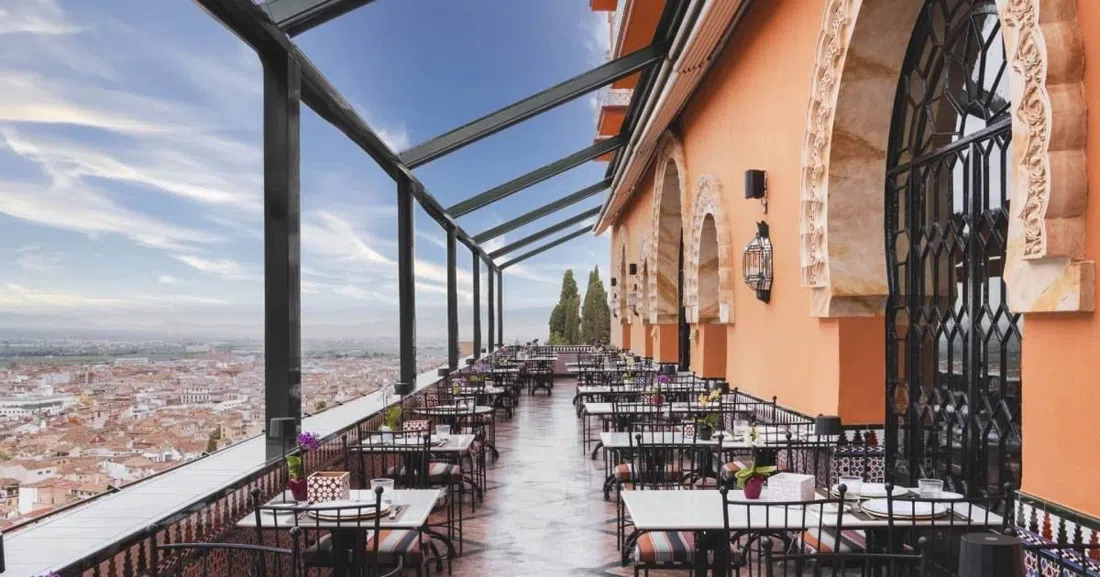
The Terraza Príncipe at the Hotel Alhambra Palace, on the hill's western shoulder above the Realejo, is open to non-residents and used to groups, and worth reserving for sunset. Be clear about what you are buying: the view is of the city dropping away below you, not of the Alhambra, because you are standing on it. Drinks are priced for the balcony.
Seeing the fortress from outside
To get the Alhambra itself in frame you have to cross the valley. The Mirador de San Nicolás, in the Albaicín, is the postcard view and deserves its reputation, the whole red wall stretched out with the snowline behind it. It is an open public square, always accessible and free, and at sunset it is shoulder to shoulder; arrive forty-five minutes early or come at dawn. One correction worth carrying up the hill: the Alhambra faces south, so you never watch the sun set from here. You watch the walls change colour, which is the better half of the deal.
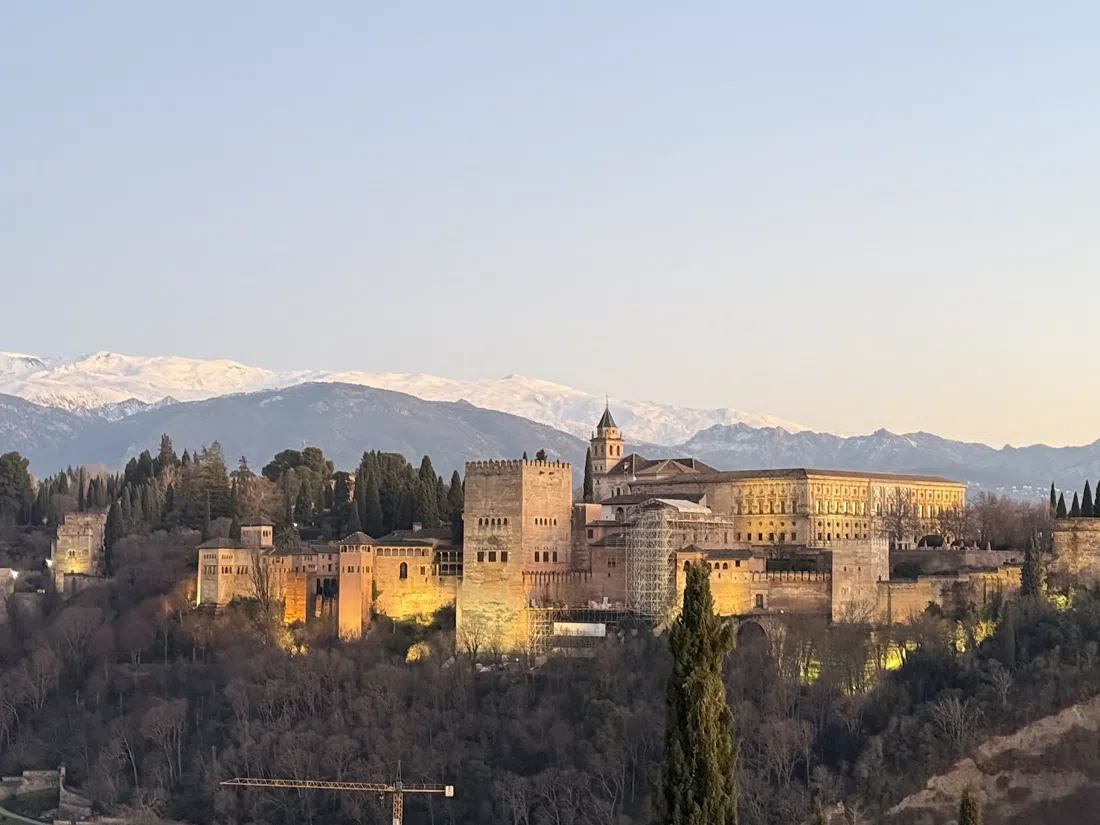
A few steps away, El Huerto de Juan Ranas in the Albaicín offers the same view sitting down with a drink in hand. The terrace is reservation-only online and fills for sunset, mains run around €20 to €30 and are frankly view-priced, and larger groups need to book well ahead. You cannot walk up and hope for a table.
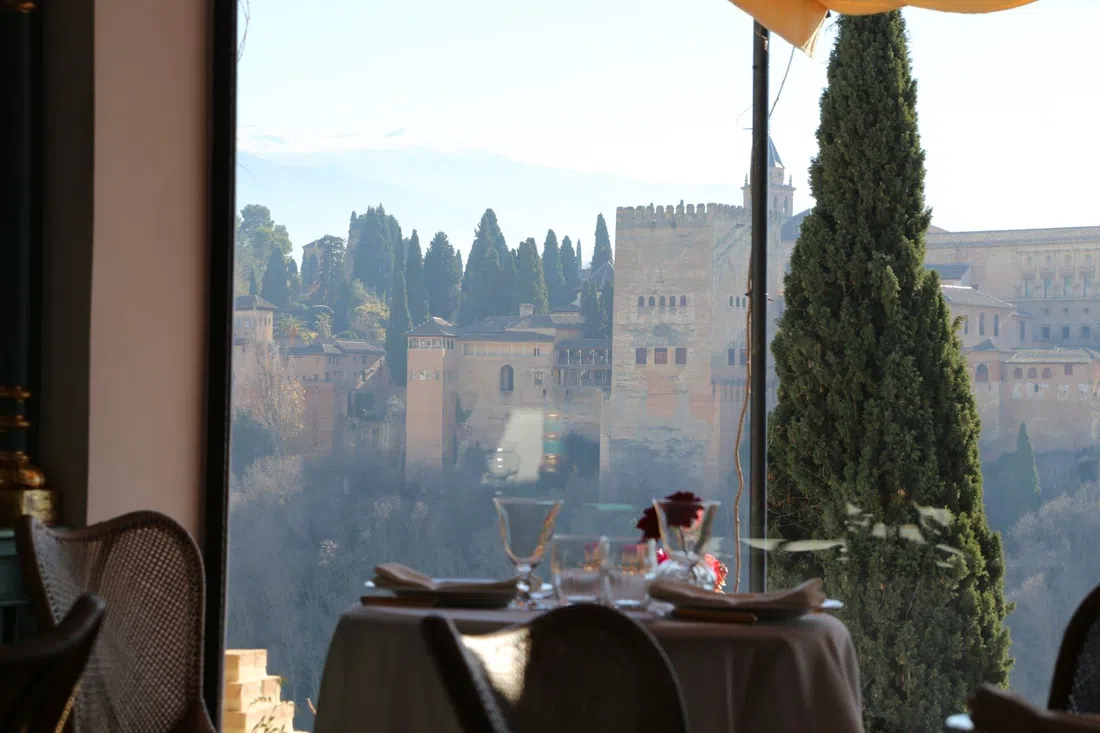
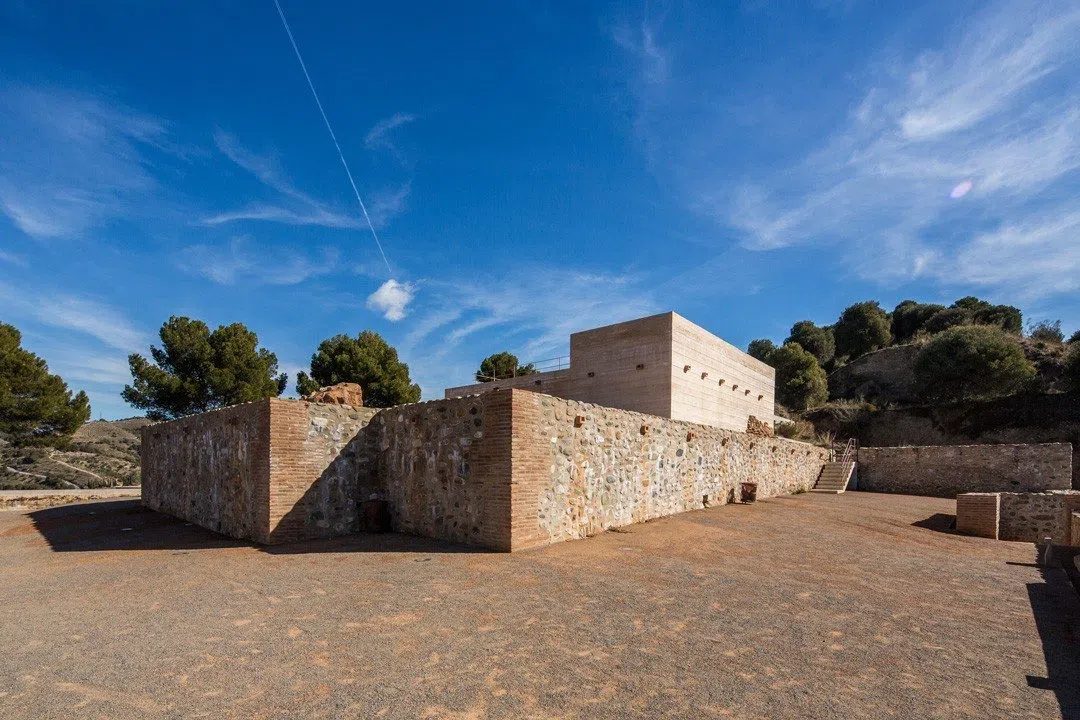
For the rarer angle, Silla del Moro (Castillo de Santa Elena) stands above the Generalife, a steep fifteen-minute climb that shows the entire complex from above instead of across. Entry is free and unticketed, but opening is limited, typically weekend mornings, so plan on the outside view and treat the interior as a bonus.
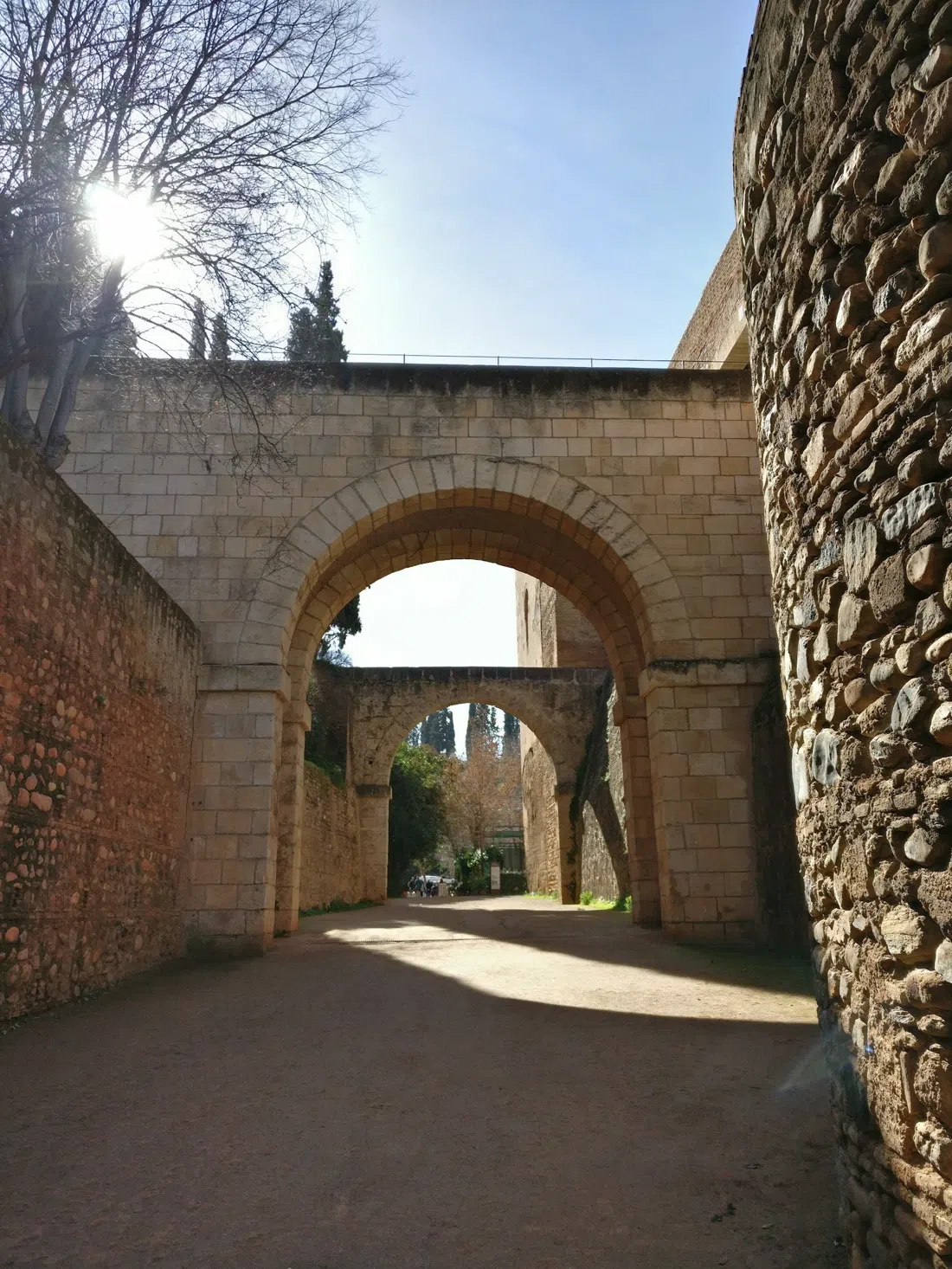
The approach itself is worth choosing deliberately. The Cuesta del Rey Chico (Cuesta de los Chinos) climbs from the Paseo de los Tristes up to the Generalife entrance in shade, beside running water, and is far pleasanter than the Cuesta de Gomérez. It is free, fine for walking single or double file, and best of all as the way down. Despite recent repaving it stays badly lit after dark, so save it for daylight.
Best time to go
Early morning is the honest answer. The first slots put you in the palaces before the heat and before the site fills, and they leave the whole afternoon free for the Albaicín side. Second best is the last couple of hours before closing, when the light is doing its work and the coach traffic has thinned.
The night visit is a different monument altogether. Only the Nasrid Palaces open, the crowds are smaller, and the lighting turns the carved plaster into something closer to relief sculpture. It works well as a second visit and is thin as a first.
Avoid building the day around a Monday if the museums matter to you, since both close. In high summer, take the exposed climbs early and accept that midday on the Alcazaba ramparts is a test of will. Spring and autumn give you long comfortable light and a hill that can actually be walked at two in the afternoon.
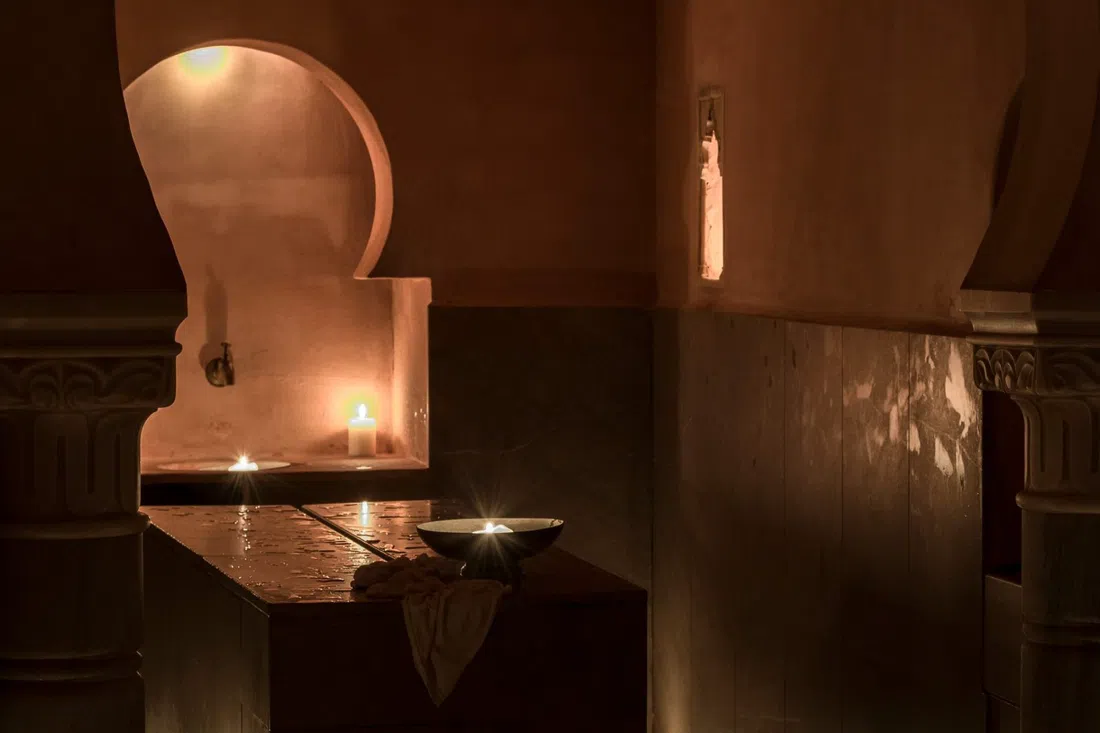
Whatever season, book something restorative for the evening: Hammam Al Ándalus Granada, in a 16th-century building on the Carrera del Darro below the Alhambra, runs 75-minute sessions from about €52, or around €59 to €73 with a massage of fifteen to thirty minutes. Silence is enforced, so it suits couples and solo travellers far better than a loud party, and popular slots go days ahead.
Is it worth it
Yes, with one condition. If you treat the Alhambra as a box to tick between two other things, you will pay €22.27 to shuffle through a masterpiece in a queue and come away wondering what the fuss was. Give it the day it asks for, with an early slot, a slow hour in the palaces, the gardens walked once in the right direction and an evening on the far side of the valley looking back at it, and there is very little in Europe that compares.
It suits patient travellers, anyone who likes architecture that whispers, and couples who can time a night visit, and it works well enough for families, though the Torre de la Vela stairs and the afternoon heat are the two friction points. Large groups work everywhere except the Nasrid slot and that single-file tower, which is where organisation stops being optional.
Practical notes
Getting up there, the walk from the centre by the Cuesta de Gomérez takes twenty-odd minutes and is steeper than it looks; the small municipal microbuses that climb to the monument are the usual alternative, and a taxi is cheap enough to be worth it in August. Walking down the Cuesta del Rey Chico is the nicest part of the day. There is a car park on the hill, but the approach roads are not where you want to be learning a hire car.
Cards work everywhere that matters, though it helps to keep a few euros for the café and the odd small ticket. Budget roughly €30 for a lean day of monument ticket plus a cheap lunch, around €70 with a proper lunch and a sunset drink, and €150 upward if you add a guide, a view-priced dinner and a hammam session.
Half a day is the minimum that respects the place. A full day is comfortable and leaves room for the museums and the gardens outside the walls. Two days lets you add the night visit without compressing anything.
Above all: be at the Nasrid door before your slot opens, not at the site entrance. Everything else on this hill can be rearranged. That half hour cannot. For where to eat, sleep and wander once you are back down in the city, see the full Granada guide.